Demis Hassabis: The Grandmaster Who Became an AI Pioneer
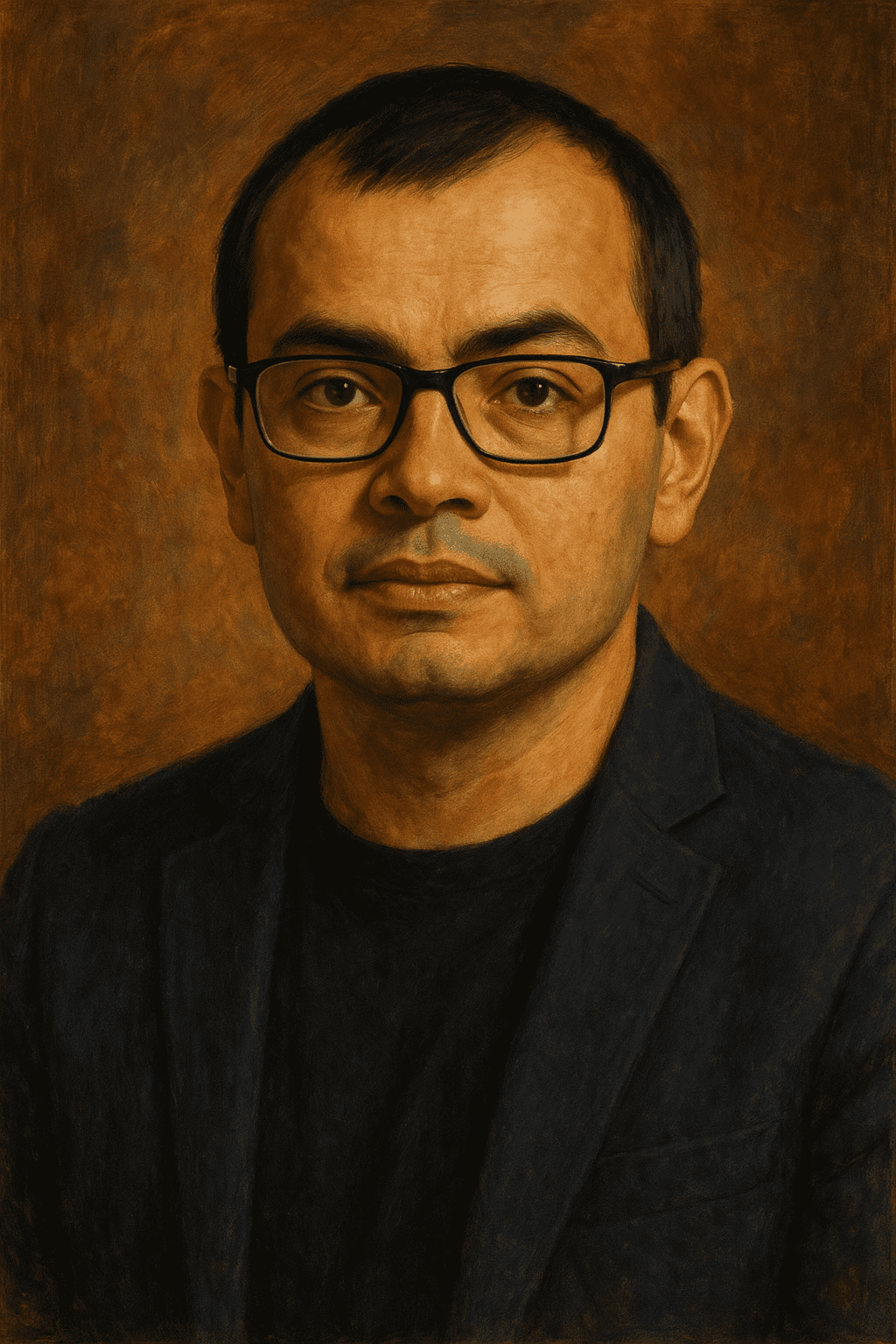
Demis Hassabis is not your average tech leader. His story reads like a mash-up of chess grandmaster brilliance, video game creativity, and cutting-edge science. The guy isn’t just in the conversation about artificial intelligence—he’s helping write the script for its future. When people talk about AI pioneers, Hassabis is one of the first names that comes to mind, and for good reason.
Early Brilliance: Chess and Curiosity
Imagine being a chess prodigy at 13, already playing at a master level. That’s Hassabis. But instead of sticking to tournaments and medals, he kept his curiosity wide open. Chess taught him strategy and long-term planning, but he wanted more—something bigger. That hunger for complexity eventually pulled him into the world of video games and, later, artificial intelligence. Funny enough, those two worlds are more connected than you might think.
By the late ’90s, Hassabis was working at Bullfrog Productions, designing games like Theme Park. While others just saw pixels and fun, he was quietly mapping out the relationship between human decision-making and machine learning. It wasn’t AI yet, but you could sense the sparks of something larger.
Brains and Academia
Leaving video games behind, Hassabis turned toward academia. He studied cognitive neuroscience at University College London and earned a PhD at Cambridge. His focus? Memory and imagination—how the brain reconstructs experiences and makes predictions. That research became the foundation for his later work in AI. Instead of treating machines like calculators, he wanted them to think more like humans do. That shift in perspective is what separates an AI pioneer from just another programmer.
Plenty of scientists get lost in theory, but Hassabis never lets the research stay locked in labs. He wanted to connect ideas to real-world systems, the kind that could learn, adapt, and even surprise us. He wasn’t satisfied with machines that only did what you told them. He wanted machines that figured things out on their own.
Founding DeepMind
In 2010, Hassabis co-founded DeepMind with Shane Legg and Mustafa Suleyman. If you’ve been following AI at all, you know the name. DeepMind made headlines for teaching machines to master Atari games from scratch. No instructions, no hand-holding—just raw learning. That was the first big sign that something new was happening.
But the world really took notice when DeepMind’s AlphaGo defeated Lee Sedol, one of the greatest Go players of all time. That moment in 2016 wasn’t just a victory for a computer program. It was a turning point in human history. People suddenly realized that AI wasn’t just a curiosity—it could outthink us in some of the most complex arenas of the mind. Hassabis, the chess prodigy, had come full circle. Now he was leading a team that created a machine capable of defeating masters at their own game.
The Google Chapter
DeepMind was acquired by Google in 2014, and Hassabis stayed on as CEO. For some, acquisitions mean dilution, but DeepMind has managed to stay focused on long-term goals. Hassabis fought to keep the culture research-driven rather than just profit-driven. That’s a tricky balance, especially when your parent company is one of the biggest corporations on the planet. But so far, DeepMind has continued to produce jaw-dropping breakthroughs.
One of the crown jewels of their work is AlphaFold, a system that can predict protein structures with incredible accuracy. This isn’t just academic fun—it has massive implications for biology, medicine, and drug discovery. Scientists called it a “revolutionary breakthrough.” Imagine diseases treated faster, new cures discovered, and biological puzzles unlocked. That’s the kind of impact that defines an AI pioneer.
Beyond Games and Science
What makes Hassabis unique isn’t just the achievements but the vision behind them. He doesn’t see AI as a toy or just a business opportunity. He frames it as a tool to expand human knowledge itself. In interviews, he often talks about using AI to tackle the grand challenges of our time—climate change, healthcare, and even space exploration. Big goals, sure, but if anyone’s track record gives hope, it’s his.
Still, he’s not naive. Hassabis has also spoken about the dangers of AI. He knows that powerful tools can be misused, and he’s been vocal about the need for safety, alignment, and ethical guardrails. That balance—optimism mixed with caution—is what makes him stand out in a field often split between doomsayers and hype merchants.
The Human Side
Here’s the fun part: Hassabis doesn’t fit the cliché of the cold, detached scientist. He’s warm, approachable, and surprisingly open about his geeky passions. Chess, gaming, science fiction—you name it, he’s into it. He strikes me as the kind of person who’d get just as excited about explaining Go strategy over coffee as he would about unveiling a world-changing algorithm. That accessibility is rare in tech leadership, where egos often overshadow substance.
There’s also a creative streak that runs through his work. You can almost feel it in the way DeepMind experiments with problems. It’s not about brute force coding. It’s about asking, “What if?” That playfulness, combined with rigor, seems to come directly from Hassabis himself.
Why He Matters Now
We’re living in a moment where AI feels both inevitable and intimidating. Every week, new tools emerge on the market, promising to transform how we work, create, and even think. But in the middle of all that noise, Hassabis represents something steady. His career shows that progress doesn’t have to mean chaos, that innovation can come with responsibility. Call him an AI pioneer or call him a scientist—either way, his influence is undeniable.
Looking ahead, the real question isn’t whether Hassabis will make more breakthroughs. It’s almost guaranteed he will. The question is how those breakthroughs will ripple through society. Will AI remain a tool for good? Or will it slip into the darker corners of human ambition? That’s the tension Hassabis spends his life navigating, and it’s why his work matters beyond the lab.
Final Thoughts
Demis Hassabis isn’t just building more intelligent machines. He’s trying to shape a brighter future. His path—from chess boards to video game studios, from neuroscience labs to DeepMind’s halls—shows how curiosity can fuel world-changing innovation. He’s proof that the lines between play, science, and technology are thinner than we think.
When the history of artificial intelligence gets written, Hassabis will have his own chapter. Not just as an AI pioneer but as someone who helped ensure intelligence, both human and synthetic, had a purpose beyond just winning games. That’s the mark of authentic leadership in a field that’s still figuring itself out.
Check out our other website, youimpressed.com.

Lead Writer, Fashion | YouImpressed.com
Marisol Herrera was born and raised in San Antonio, Texas. She is fluent in Spanish, English, and exotic flavors. From an early age, she was immersed in the culinary world, helping her aunt run a neighborhood restaurant filled with family recipes and rich traditions.
She attended the Culinary Institute of America in San Antonio, earning a degree in Culinary Arts with a minor in Food Writing. Marisol enjoys traveling to exotic locations in search of authentic recipes and unforgettable dishes.
In her spare time, she enjoys gardening, raising her two children, and salsa dancing with her husband.
Note: This is a fictional bio. See About page for more information.