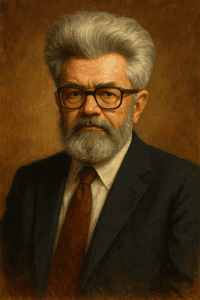
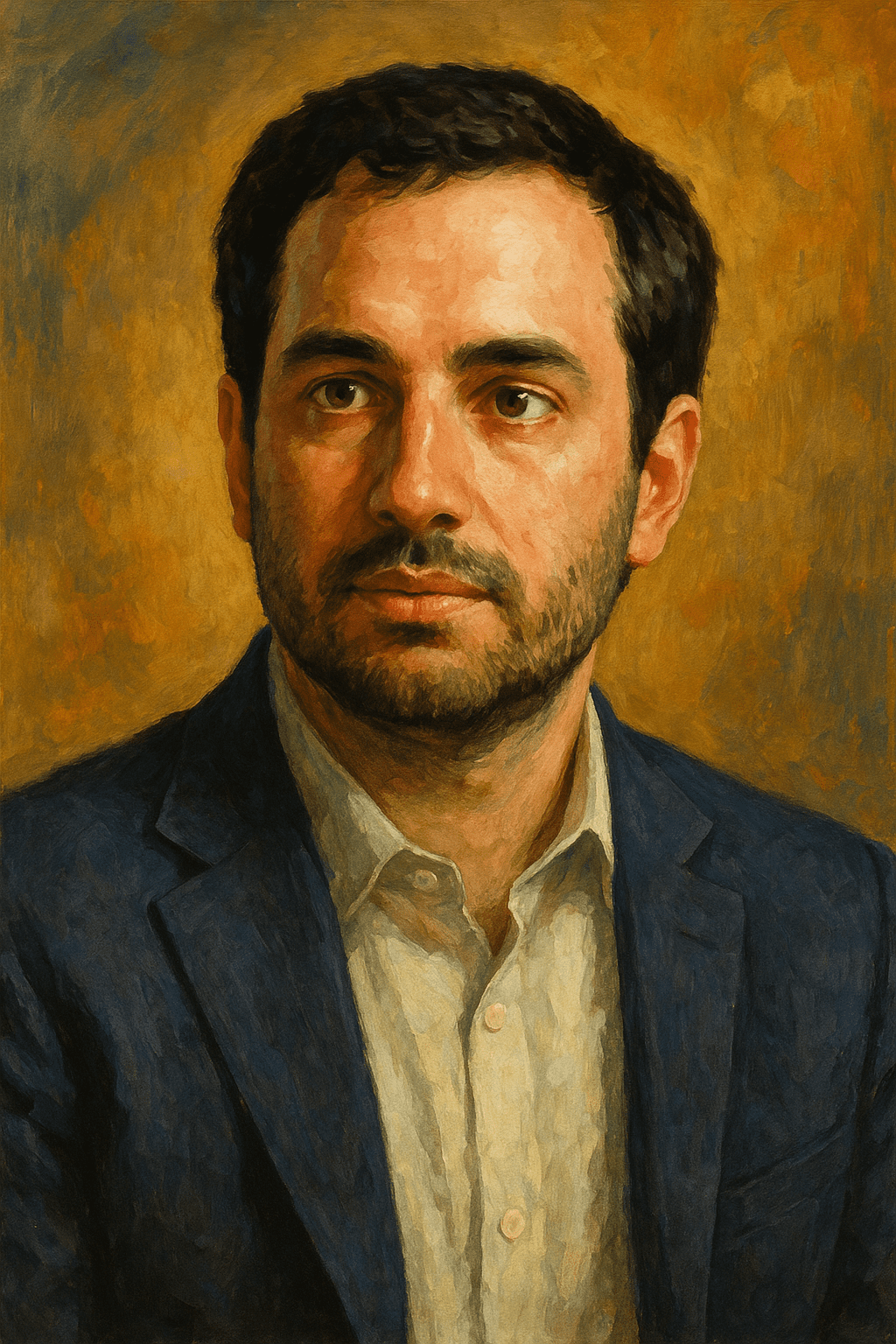
Dario Amodei isn’t exactly a household name, but in the world of artificial intelligence, he’s one of the sharpest minds shaping the future. He doesn’t just study machines—he pushes them toward something safer, more innovative, and more human-aligned. In an age where everyone throws around buzzwords about AI, Amodei sits at the center of the storm, building the kind of systems that could literally change how we live and work tomorrow.
From Physics to Algorithms
Amodei started out in physics, not coding, which almost makes his story more interesting. Physics people tend to have a different way of looking at the world—always searching for the deep rules underneath the chaos. That mindset carried him into the heart of AI research, where structure, logic, and a bit of imagination collide. Somewhere along the line, he traded in equations for neural networks, and the gamble paid off. Big time.
While working at OpenAI, Amodei co-authored some of the most influential papers in the field. His work didn’t just move numbers around; it asked the tough questions about where the technology was heading and how to keep it in check. He knew AI wasn’t just going to be about smarter chatbots—it was going to have real-world power, and power always comes with risk.
The OpenAI Years
Think of OpenAI as the garage band before it becomes a stadium tour. In those early days, Amodei and his colleagues were experimenting, breaking things, and asking, “What happens if we scale this up?” His fingerprints are all over some of the breakthroughs that have given AI significant leaps forward. He played a role in building systems that could write, translate, and understand in ways most people thought were decades away.
But the story doesn’t end there. Like any good thinker, he didn’t stick around just to be comfortable. After a while, Amodei left OpenAI and co-founded Anthropic. That decision wasn’t just a career move—it was a statement. Anthropic’s mission? To build AI that’s not only powerful but also aligned with human values. In other words, don’t just make machines smarter, make them safer. Simple idea, but not so simple to pull off.
Anthropic and the Big Picture
Anthropic feels different from other startups in the AI scene. While plenty of companies are racing to release the following big product, Anthropic is more like the cautious driver who knows the brakes matter just as much as the engine. Under Amodei’s leadership, the company is trying to set a new standard for AI research. The emphasis isn’t just on what machines can do, but on what they should do. That subtle difference may ultimately become the dividing line between a helpful technology and a dangerous one.
Some people view Anthropic as a competitor to OpenAI, and perhaps it is. But Amodei doesn’t seem too caught up in the rivalry. His focus looks more like a long game—building guardrails before the road gets too fast and too crowded. If you want to geek out, you can read about Anthropic’s approach directly on their official site. It’s packed with philosophy, policy, and some very nerdy—but fascinating—details.
Why AI Needs Guardrails
Let’s be honest. AI can feel like magic sometimes, but it’s also scary. Imagine systems that can generate convincing fake videos, hack into networks, or flood the internet with misinformation. Without people like Amodei pushing for safety, we could be in for some serious problems. His work in AI research strikes a balance between the promising future and the uncomfortable “what ifs.” That kind of thinking doesn’t always get headlines, but it keeps the field grounded.
He’s not against innovation—far from it. He just seems unwilling to let progress blind us to consequences. That’s the part that feels refreshing. Lots of tech leaders love the spotlight. Amodei? He strikes me as someone who’d rather spend a late night poring over code than give a keynote speech. And honestly, the field probably needs more of that quiet, deliberate energy.
The Personal Side
There’s not a ton of flashy personal trivia floating around about Amodei, which is unusual in today’s oversharing culture. No Instagram reels of his morning routine, no constant stream of hot takes on X (formerly Twitter). Instead, his identity is tied to the quality of his work. There’s something kind of old-school about that. It almost makes him more impressive. Like a musician who doesn’t care about fame but just wants to write great songs.
Still, you can’t help but wonder what drives him. Maybe it’s that physics background. Perhaps it’s the realization that AI is larger than any one person or company. Or maybe it’s just curiosity—the thing that pulls someone deeper into problems that most people run away from. Whatever the motivation, it is evident in the output: careful, rigorous, yet also bold.
Shaping the Future
Looking forward, Amodei’s role in AI research feels central. Anthropic’s work on alignment could very well influence how governments, universities, and corporations handle the technology. We’re already seeing regulators scramble to catch up with AI’s speed. Without experts who understand both the tech and the risks, the rules could end up either too soft or too harsh. Amodei is positioned in that rare middle space—someone technical enough to innovate and thoughtful enough to see the pitfalls.
One of his ongoing projects includes building large language models designed with built-in safety constraints. That’s not just clever engineering—it’s a shift in how the field thinks about responsibility. Instead of making something dangerous first and patching it later, Anthropic is trying to bake safety in from the beginning. It feels a little like designing a car with airbags as a default, not an afterthought.
The Human Imperfection in a Machine World
Here’s a peculiar thought: perhaps what makes Amodei’s work so critical is that he acknowledges human imperfection. AI promises efficiency, precision, and endless energy. Humans, on the other hand, make mistakes, take naps, and argue over dinner. The balance between those two realities is tricky. Amodei doesn’t try to pretend humans are flawless, but he seems determined to make sure AI doesn’t make things worse. In some ways, he’s building systems that recognize the messiness of human life and still manage to be useful.
Final Thoughts
Dario Amodei may not be a celebrity, but his work casts a long shadow. In the noisy world of AI, he’s the calm voice asking the essential questions: how do we keep the benefits while minimizing the risks? Where do we draw the line between ambition and recklessness? And most importantly, how do we make sure the technology we build reflects our best selves, not our worst impulses?
AI research is a field that moves at breakneck speed, but leaders like Amodei remind us that the future isn’t just about racing ahead. Sometimes it’s about slowing down, thinking twice, and building something that lasts. His career path—from physics to OpenAI to Anthropic—reads less like a straight line and more like a series of leaps guided by instinct and conscience. Maybe that’s the real lesson: progress doesn’t always mean moving fast. Sometimes it means moving carefully.
Check out our other website, youimpressed.com.

Lead Writer, Travel | YouImpressed.com
Sophie Lanier turns global adventures into vivid stories, uncovering hidden gems and unforgettable experiences in every corner of the world. She also reviews the latest travel accessories and the most impressive yacht charters.
Raised in Charleston, South Carolina, Sophie studied international journalism at the College of Charleston before deciding a proper education would come from the road. Since then, she has explored over 40 countries, chronicling everything from the street food of New Delhi to serene cliffside temples deep in the Mexican jungle.
When she isn’t traveling, she enjoys gardening, hiking the Carolina trails, feasting on crab and oysters, and enjoying a few beers at the Charleston crab shack.
Note: This is a fictional bio. See About page for more information.