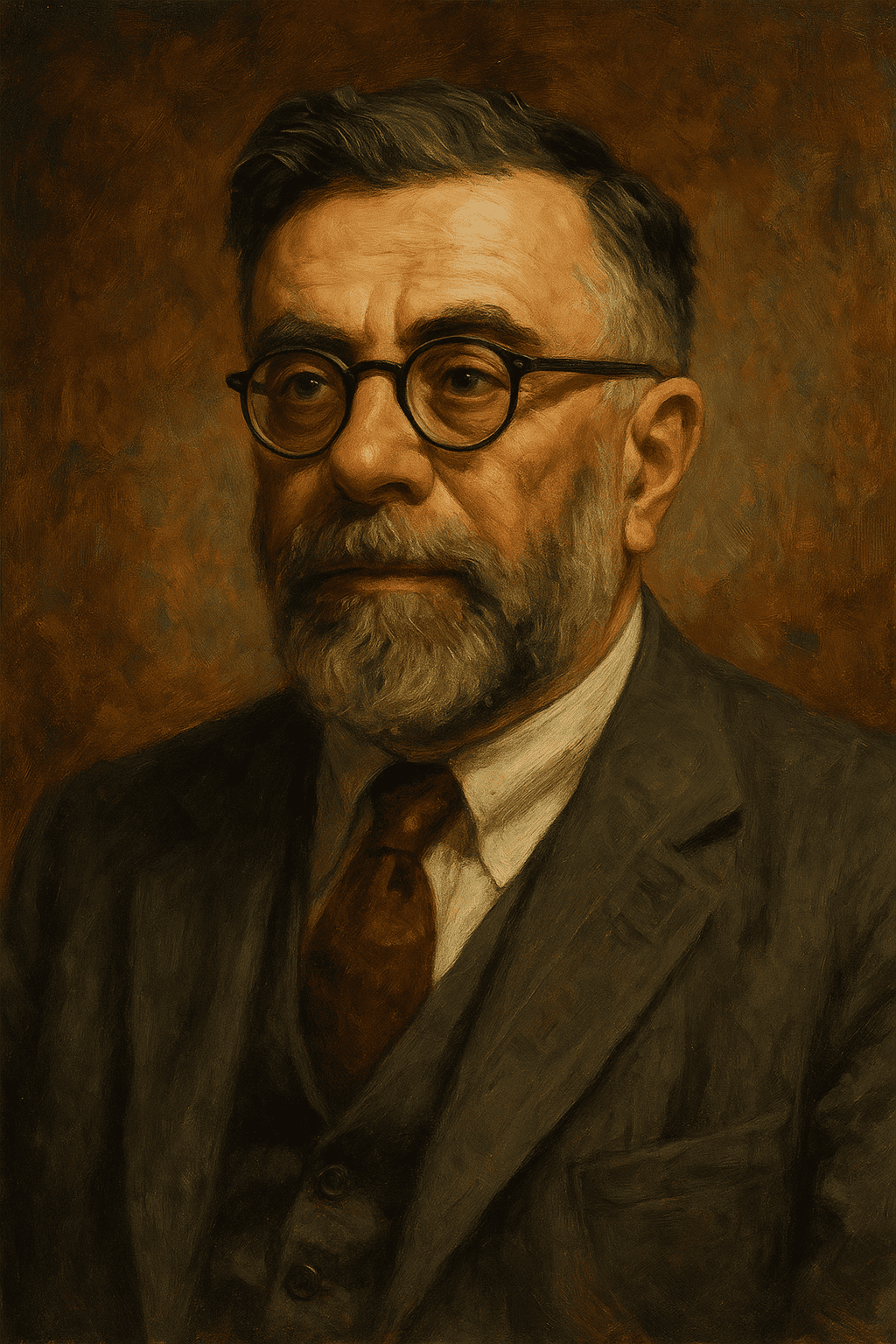
Norbert Wiener: The Father of Cybernetics Who Saw the Future
Norbert Wiener wasn’t your typical mathematician. He was restless, quirky, and always chasing patterns in places others overlooked. Today, he’s remembered as the father of cybernetics. This title may sound like science fiction, but it actually describes one of the most critical shifts in modern thinking about machines, humans, and systems. His ideas ripple through AI, robotics, communication theory, and even our understanding of society itself.
A Prodigy in the Making
Wiener was a child prodigy. By the age of 14, he had already earned his bachelor’s degree from Tufts College. Imagine being a teenager and already studying advanced mathematics at Harvard and Cambridge. That was Wiener. He wasn’t just smart—he was relentlessly curious. He loved logic, puzzles, and anything that made him think harder than the day before. That obsession with patterns became the foundation for his later role as the father of cybernetics.
Mathematics Meets Machines
World War II changed everything for Wiener. He worked on projects involving anti-aircraft systems, trying to figure out how to predict where enemy planes would move so weapons could respond in real time. To do that, he had to combine mathematics, engineering, and feedback systems. Suddenly, he wasn’t just solving equations—he was helping machines “think” in a crude but powerful way. That was the spark that led him toward cybernetics.
Cybernetics, as defined by him, was the study of control and communication in animals and machines. Sounds abstract, but it’s the groundwork for modern AI and robotics. Without Wiener’s ideas, the connections between biology, technology, and feedback systems might have taken decades longer to appear. That’s why people rightly call him the father of cybernetics.
The Birth of Cybernetics
In 1948, Wiener published his groundbreaking book “Cybernetics: Or Control and Communication in the Animal and the Machine”. That book laid out a framework that tied together engineering, biology, and information theory. Suddenly, scientists and engineers had a new language for talking about feedback loops, control systems, and self-regulating processes.
Feedback loops became the star of the show. Just like a thermostat adjusts a heater to maintain a steady temperature, Wiener argued that both living beings and machines rely on feedback to survive and adapt. That insight made him the father of cybernetics and one of the first thinkers to truly blur the line between biology and technology.
Visionary Ideas
Wiener wasn’t content to stop at theory. He imagined practical applications for his ideas—machines that could learn, systems that could adapt, and networks that could communicate like nervous systems. In many ways, he predicted the foundations of computing, AI, and even the internet. Long before today’s debates about automation, Wiener warned that machines might take over jobs and reshape society. He saw the promise, but he also saw the risks.
What makes him fascinating is how he balanced optimism with caution. He celebrated the potential of cybernetics to improve medicine, communication, and education. At the same time, he warned about misuse, surveillance, and the loss of human autonomy. That dual perspective gives his work a timeless relevance.
Teaching and Influence
As a professor at MIT, Wiener influenced generations of students. He wasn’t always the easiest teacher—his style could be scattered, his thoughts racing faster than most people could keep up with. But those who stuck around often found themselves transformed. He made them see connections between fields that seemed worlds apart. That interdisciplinary spirit is part of why he’s remembered as the father of cybernetics.
He wasn’t a solitary genius locked in an ivory tower. He collaborated with engineers, psychologists, physiologists, and more. His work inspired breakthroughs in everything from prosthetics to computing. He showed that the boundaries between disciplines were more artificial than real.
The Human Side of Wiener
Wiener wasn’t all equations and theory. He had quirks, stories, and a personality that sometimes baffled those around him. He could be eccentric—forgetful, absentminded, and occasionally blunt. But those quirks made him human. In fact, his imperfections made his genius more relatable. He wasn’t some robotic machine of intellect—he was a messy, brilliant human being who happened to change the course of science.
Colleagues often remembered his sense of humor and his willingness to dive into philosophical debates. He wasn’t afraid to ask the weird questions. Could machines have intentions? Could they ever be considered alive? Those questions sound almost like science fiction, but Wiener asked them decades before most people began to think about artificial intelligence in profound ways.
Warnings About the Future
One of the most striking things about Wiener was his concern for ethics. He wasn’t blinded by technology’s power. He worried about automation replacing workers and about governments misusing machines for control. In his book “The Human Use of Human Beings”, he laid out a vision for how society should handle the growing role of machines. He insisted that technology should serve humanity, not the other way around. That insistence adds weight to his legacy as the father of cybernetics.
Looking at today’s debates about AI, automation, and surveillance, it’s almost eerie how accurately Wiener predicted the challenges. He wasn’t perfect, but his warnings feel more relevant now than ever.
Legacy and Impact
The fields influenced by Wiener’s work are staggering: robotics, computer science, biology, engineering, communication theory, and even philosophy. He didn’t just create a field—he made a mindset. Once you start looking at the world through the lens of feedback loops and control systems, everything looks different. You begin to see patterns in nature, society, and technology that connect in surprising ways.
That’s the true power of being the father of cybernetics. He didn’t just invent a few gadgets or publish a few papers. He reframed humanity’s perception of itself and its machines.
Final Thoughts
Norbert Wiener’s life shows what happens when curiosity collides with courage. He dared to ask questions no one else was asking, and he dared to answer them with bold, interdisciplinary ideas. He may have been eccentric, sometimes controversial, but he left behind a legacy that continues to shape our world.
Every time a robot learns from mistakes, every time a network self-corrects, every time a machine interacts with a human in a meaningful way—you can trace a line back to Wiener. He truly earned the title “Father of Cybernetics.”
Check out our other website, youimpressed.com.

Lead Writer, Beyond Impressive | YouImpressed.com
With a background in cultural journalism, Miles writes feature pieces and product reviews on everything that pushes the boundaries of “impressive.”
Raised in Chicago by his mother, an antique dealer and part-time sci-fi novelist, he developed a lifelong fascination with rare objects and stories that sound too wild to be true. He earned his journalism degree with a minor in art from the University of Chicago and has made it his mission to uncover the most over-the-top products and experiences on the planet.
When he’s not writing, Miles moonlights as a competitive butter sculptor, where his hobby has earned him three regional titles and more than a few odd glances.
Note: This is a fictional bio. See About page for more information.