Marvin Minsky: The AI Pioneer Who Dreamed Machines Could Think
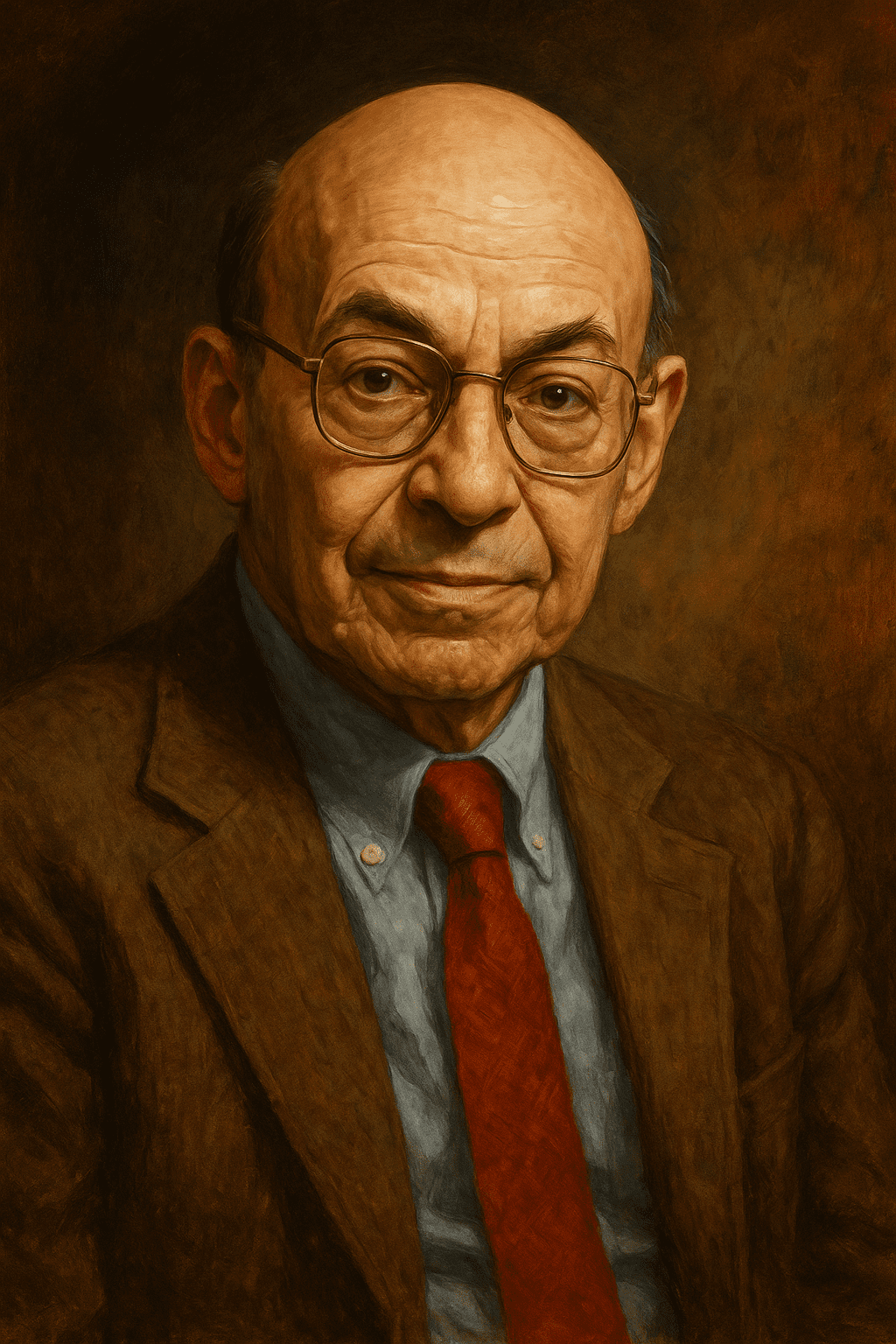
Marvin Minsky wasn’t the kind of scientist who stuck to neat, polished answers. He thrived in questions, in the messy and sometimes uncomfortable space of curiosity. Known by many as The AI Pioneer, he shaped how people think about intelligence, machines, and the strange overlap between the two. His career stretched across decades, yet his ideas still feel alive in today’s conversations about artificial intelligence.
A Childhood of Curiosity
Minsky grew up in New York City, the son of a surgeon and an activist mother. He attended some of the city’s top schools, but his interests extended far beyond the classroom. He tinkered with machines, built gadgets, and asked endless “what if” questions. That restless curiosity became the blueprint for his career. When you look at his life, it feels inevitable that he would be remembered as The AI Pioneer.
Brains, Math, and MIT
Before diving into machines, Minsky studied mathematics at Harvard and later earned his PhD at Princeton. His doctoral thesis explored neural networks, an idea way ahead of its time in the early 1950s. Most people saw them as fringe concepts back then, but Minsky saw potential. He wasn’t afraid to challenge consensus, and that streak defined much of his work.
In 1959, Minsky co-founded the MIT Artificial Intelligence Laboratory. Imagine a playground for thinkers, dreamers, and tinkerers. That lab became one of the world’s most important hubs for AI research, producing breakthroughs that shaped both theory and practice. Many of today’s AI leaders trace their roots back to that lab. Minsky’s fingerprints are everywhere.
Machines That Think
Minsky’s most famous contribution wasn’t a single invention but a set of ideas. He argued that intelligence could be broken down into smaller, simpler processes. Put enough of those processes together, and you could build something resembling thought. It sounds obvious now, but at the time it was radical. That’s why so many call him The AI Pioneer.
He wrote books, gave lectures, and constantly pushed boundaries. His book, “The Society of Mind,” introduced a way of thinking about the brain as a collection of agents working together, rather than a single unified force. That model influenced everything from computer science to psychology. His later book, “The Emotion Machine,” took it further, suggesting that emotions themselves could be modeled computationally. Whether you agreed or not, you couldn’t ignore his vision.
The Robot Experiments
Minsky loved to experiment. He built robotic arms, early vision systems, and even mechanical turtles that could move around a room. These projects might look primitive today, but at the time, they were revolutionary. The point wasn’t perfection—it was proof that machines could perceive, act, and learn in ways once thought impossible. Each experiment carried the signature of The AI Pioneer, pushing the envelope.
The Controversial Side
Minsky wasn’t afraid of controversy. In fact, he seemed to thrive in it. He sometimes made bold predictions, like suggesting machines would one day surpass human intelligence. Critics accused him of overhyping, but those same critics often underestimated the field’s rapid pace. He also famously co-authored a book called “Perceptrons,” which criticized early neural networks. That book slowed interest in the field for a while, but in hindsight, even his critiques shaped the trajectory of AI research. He pushed, pulled, and sometimes provoked—yet always kept the field moving.
Teaching and Influence
As a professor at MIT, Minsky wasn’t just a researcher—he was a mentor. Generations of students learned from his sometimes eccentric but always thought-provoking teaching style. Many of his protégés went on to become leaders in computer science, robotics, and AI. That ripple effect might be his most incredible legacy. You don’t get to be called The AI Pioneer without influencing the next wave of innovators.
Stories about Minsky often include his playfulness. He was known to play piano, tell jokes, and wander off into creative tangents. He believed creativity and science weren’t separate—they were partners. That belief colored how he ran his lab and how he approached problems.
The Larger Vision
Minsky didn’t just see AI as technology. He saw it as philosophy. Could machines think? Could they feel? If they became intelligent, what did that mean for humanity? He didn’t always have answers, but he wasn’t afraid of the questions. That courage made him stand out. While others narrowed their focus, Minsky widened his, asking how AI connected to art, society, and even consciousness itself.
His vision went beyond utility. He imagined AI as a mirror, reflecting not just human capabilities but human flaws. By studying how machines think, we may gain a deeper understanding of ourselves. That’s the kind of perspective that defines The AI Pioneer.
Pop Culture and Public Life
Minsky wasn’t confined to academia. He consulted on films, including “2001: A Space Odyssey”, where his insights shaped the portrayal of HAL 9000, one of cinema’s most famous AI characters. He appeared in documentaries, wrote essays, and often shared his thoughts with the media. For him, public engagement was part of the mission. AI wasn’t just for scientists—it was for everyone to think about. By stepping into pop culture, he made AI less abstract and more approachable.
The Human Side
Despite his reputation as a genius, Minsky had a very human side. He could be quirky, playful, and sometimes blunt to a fault. Colleagues remember his sense of humor and his willingness to engage in lively conversations. He didn’t separate life and work—they blended into one continuous stream of exploration. That authenticity made him memorable beyond his research.
Why He Still Matters
Even though Marvin Minsky passed away in 2016, his influence hasn’t faded. AI today—whether in language models, robotics, or vision systems—still echoes his ideas. Neural networks, which he once criticized, have made a remarkable comeback, stronger than ever. But that doesn’t erase his role; it highlights how complex the journey of science can be. Mistakes, pivots, and contradictions are all part of progress. That messy, human side of science is exactly what Minsky embodied as The AI Pioneer.
In a world where AI is everywhere—on phones, in hospitals, in entertainment—it’s worth remembering the thinkers who laid the foundation. Minsky’s work reminds us that AI isn’t just code. It’s philosophy, creativity, and imagination.
Final Thoughts
Marvin Minsky’s life wasn’t about one single discovery. It was about curiosity without boundaries. He believed in asking questions even when answers felt impossible. He built labs, robots, books, and ideas that continue to inspire. Call him eccentric, call him brilliant, but don’t forget to call him what he was: The AI Pioneer.
Check out our other website, youimpressed.com.

Lead Writer, Smartphones | YouImpressed.com
Nathan Wells, also known as the smartphone guru, makes mobile tech both entertaining and informative. He earned his degree in Media Technology from the University of Southern California, attending on a full scholarship after winning a national competition for designing a smartphone app that turned smartphones into mini metal detectors.
In his spare time, Nathan enjoys spending time with his girlfriend and designing a new app that utilizes low-frequency signals, similar to those used in heat-seeking radar, to locate lost cats. The app has not found any cats yet.
Note: This is a fictional bio. See About page for more information.