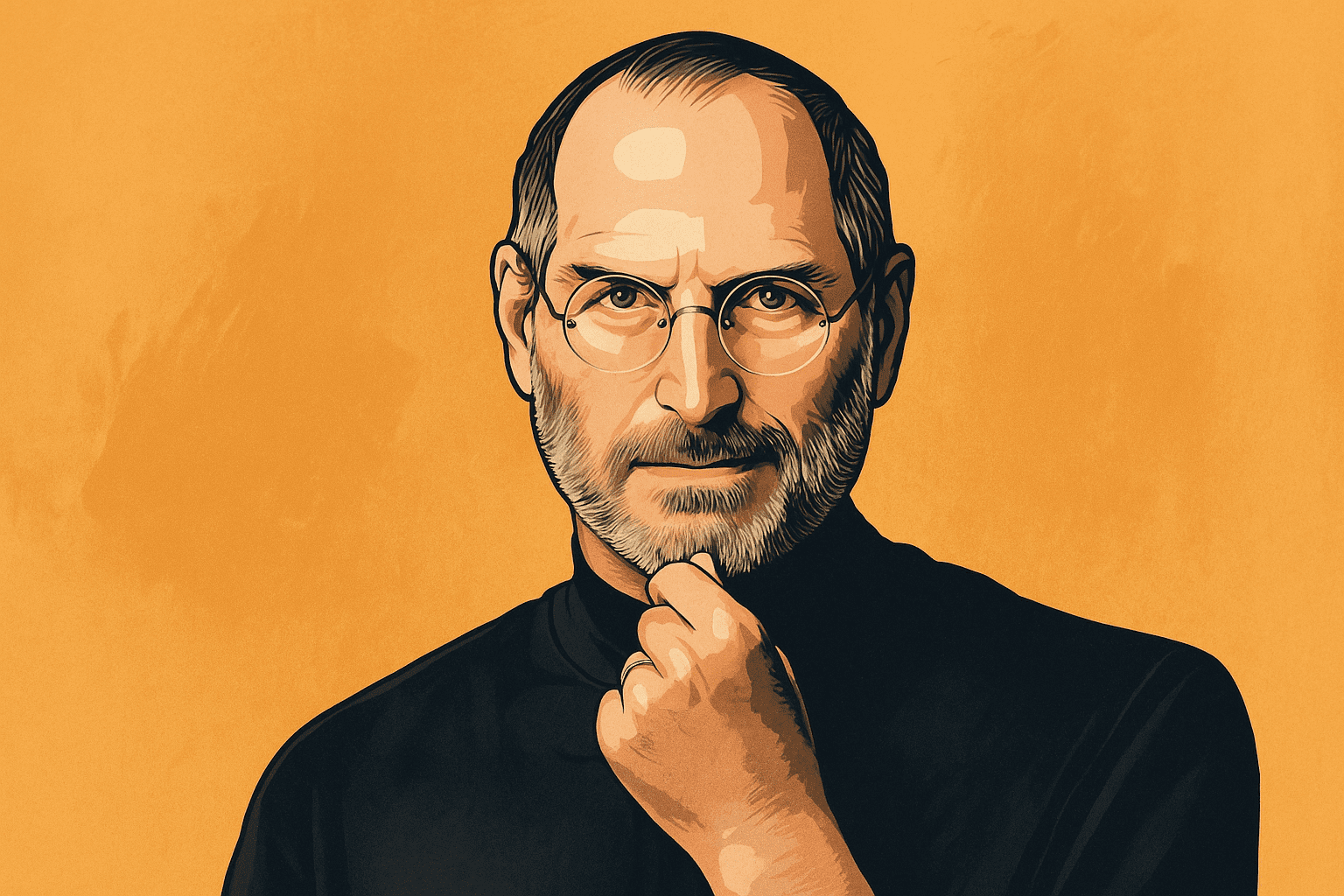
Steve Jobs: A Visionary Innovator in Technology and Design
When people talk about leaders who changed the world, Steve Jobs almost always makes the list. His name is practically synonymous with Apple, but his influence stretches far beyond iPhones, iPads, and MacBooks. Jobs had an uncanny ability to spot what people didn’t even know they wanted and then deliver it in a way that made everyone wonder how they ever lived without it. That unique mix of business sense, creativity, and daring vision makes him a true visionary innovator in technology and design.
Early Spark of Genius
Steve Jobs grew up in California at the heart of what would later become Silicon Valley. He wasn’t the kind of kid who followed the rules. Instead, he tinkered, experimented, and looked for ways to push boundaries. After attending Reed College briefly, Jobs dropped out, but he continued to sit in on classes that interested him—like calligraphy, which later inspired Apple’s famous focus on typography and beautiful design. That decision would become a defining trait of a visionary innovator in technology and design: seeing connections between art and technology where others saw none.
Apple Begins
In 1976, Jobs and his friend Steve Wozniak co-founded Apple Computer in a garage. The Apple I was born, and soon after came the Apple II, which became one of the first mass-produced personal computers. Jobs wasn’t the engineer; Wozniak handled that. Jobs was the dreamer, the presenter, the one who could take raw innovation and frame it in a way the public could understand. That combination set Apple apart and put Jobs on the map as a visionary innovator in technology and design.
The Macintosh Era
The launch of the Macintosh in 1984 wasn’t just another product release; it was a cultural moment. Jobs famously introduced the Mac with a commercial directed by Ridley Scott that aired during the Super Bowl. The Macintosh stood out because it put a graphical user interface in front of everyday users, making computers less intimidating and more accessible. Jobs understood that design and user experience were as important as raw computing power, which reinforced his identity as a visionary innovator in technology and design.
Leaving Apple
Not everything went smoothly. In 1985, Jobs was forced out of Apple after internal power struggles. Most people would have stepped back after such a huge blow, but Jobs doubled down. He founded NeXT, a company that built advanced computers aimed at education and business markets. While NeXT didn’t succeed commercially, its software later became the foundation for macOS. Jobs also purchased Pixar from George Lucas, turning it into the animation powerhouse that brought us Toy Story. Pixar’s success proved again that Jobs was a visionary innovator in technology and design, even outside traditional computing.
The Return to Apple
In 1997, Apple bought NeXT, bringing Jobs back to the company he started. Apple at that time was struggling, with declining sales and a fading brand. Jobs quickly turned things around by simplifying the product line, cutting waste, and focusing on bold new ideas. The launch of the iMac in 1998, with its colorful, user-friendly design, signaled Apple’s comeback. Jobs showed the world how a visionary innovator in technology and design could revive a failing company and make it cool again.
The iPod and iTunes Revolution
Music changed forever when Apple introduced the iPod in 2001. “A thousand songs in your pocket” wasn’t just a tagline; it was a revolution. Combined with iTunes, the iPod created an ecosystem that reshaped the music industry. People no longer needed CDs or clunky MP3 players. Jobs didn’t invent digital music, but he made it simple, elegant, and mainstream. That clarity of vision is exactly what you’d expect from a visionary innovator in technology and design.
The iPhone and the Smartphone Era
Nothing demonstrates Jobs’ impact more than the iPhone. Released in 2007, the iPhone combined a phone, an iPod, and an internet device into one sleek product. Before the iPhone, smartphones were clunky, with physical keyboards and confusing software. Jobs stood on stage and introduced a touchscreen device that changed everything. Today, the smartphone is an essential part of life, and it all traces back to that moment. Few people could argue against Jobs being a visionary innovator in technology and design after that.
For a deeper look at Apple’s current products, you can visit the official Apple website, which continues to showcase the company’s commitment to merging technology and design.
The iPad and Beyond
After the iPhone, Jobs continued to push the limits with the iPad in 2010. Many people dismissed it as just a big iPhone, but Jobs knew better. The iPad carved out a new space between laptops and phones, becoming a favorite for reading, streaming, and even creative work. Once again, he showed why people considered him a visionary innovator in technology and design.
Design Philosophy
Jobs cared deeply about design, often obsessing over tiny details that most people would overlook. He believed technology should not only work well but also look and feel beautiful. He once said, “Design is not just what it looks like and feels like. Design is how it works.” That statement sums up his philosophy and why people still view him as a visionary innovator in technology and design.
Impact on Other Industries
Jobs didn’t just influence technology. Through Pixar, he reshaped the animation industry. With the iTunes Store, he redefined the music industry. The App Store opened doors for developers worldwide, creating an entire economy around mobile apps. Each move reinforced the idea that Jobs was more than a businessman—he was a visionary innovator in technology and design whose influence cut across industries.
Challenges and Criticisms
Jobs wasn’t perfect. He faced criticism for being demanding, sometimes harsh with employees, and obsessive about control. Some of his products, like the Newton, flopped. Yet those challenges only add depth to his story. The willingness to fail, learn, and try again is part of what made him successful. Many would agree that a visionary innovator in technology and design is defined not by never failing but by bouncing back stronger each time.
Final Years and Legacy
Jobs battled pancreatic cancer in his final years, but he kept working until the very end. He stepped down as Apple’s CEO in August 2011 and passed away just weeks later. The outpouring of grief worldwide was unprecedented for a business leader. Apple Stores became memorials, and millions reflected on how his products touched their lives. His legacy remains a reminder of what one person with vision and determination can achieve. Many still look back at him as the ultimate visionary innovator in technology and design.
Why Steve Jobs Still Inspires
Entrepreneurs, creatives, and technologists continue to study Jobs’ life for inspiration. His speeches, like the Stanford commencement address, still circulate widely. Startups cite him when they talk about thinking differently. Apple continues to thrive, and every new iPhone or Mac reminds people of the man who set the foundation. Jobs showed the world that technology could be personal, beautiful, and transformative. He proved time and again why he remains the most iconic visionary innovator in technology and design.
Final Thoughts
Steve Jobs wasn’t just about making products. He was about making life better, simpler, and more meaningful through technology. He lived at the intersection of art and engineering, which is why his story still resonates. From the first Macintosh to the iPhone that revolutionized communication, Jobs changed how humans interact with technology. His ability to imagine the future and then build it is what defines a visionary innovator in technology and design. And that’s why his legacy will never fade.
Discover more inspiring leaders and innovators at YouImpressed.com.

Lead Writer, Wellness | YouImpressed.com
Rachel covers the ever-evolving world of wellness, blending science, trends, and personal insight into content that’s informative and inspiring. From red light therapy to adaptogenic teas and next-gen wellness tech, she is constantly exploring what helps people feel better and live well.
Raised in San Diego, Rachel earned her degree in Health Communications from UCSD, where she also competed on the university swim team. When she is not testing the latest wellness gadgets or reviewing top-tier retreats, you’ll find her running or swimming along the beaches of Southern California.
Note: This is a fictional bio. See About page for more information.